[India × Japanese Companies] Global Strategies for the Future Driven by Co-Creation and Transformation (Part 3) Take the First Step by Adopting a GCC Approach That Fits Your Company

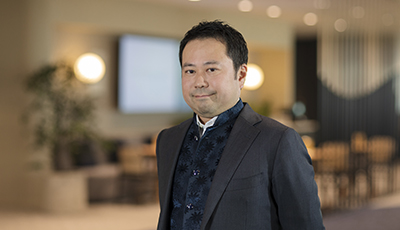
Head of ABeam India Business Yasuhisa Omura
News Focus

ABeam Consulting, in collaboration with its Indian alliance partner Optimum Infosystem, which employs approximately 4,000 technology professionals, established a Global Capability Center (Global Capability Center, hereinafter GCC) in India in July 2025.
There are already approximately 1,800 GCC locations in India. While utilization by European and U.S. companies is leading the way, Japanese companies account for only about 90 of these locations, indicating that adoption is still in its early stages. Although there are hurdles such as differences in language and work practices, what is the significance of taking the step to leverage this opportunity without missing it? Yasuhisa Omura, Principal, Head of ABeam India Business, Sustainable SCM Strategy Unit, who led the establishment of ABeam Consulting’s GCC, provides his analysis.

*This article is the final installment of a three-part series.

Consultant

ABeam Consulting
Principal, Head of ABeam India Business
Sustainable Supply Chain Management Strategy Unit
Yasuhisa Omura

ABeam Consulting Principal, Head of ABeam India Business Sustainable SCM Strategy Unit Yasuhisa Omura

India’s Transformation into a Digital Nation and Rapidly Growing Expectations for GCCs

Up to this point, we have discussed the strong expectations directed toward India from around the world and the results that European and U.S. enterprises and big tech companies have achieved by strategically incorporating GCCs (Global Capability Centers, hereinafter GCCs). At the same time, we have shared points that Japanese companies should be mindful of when utilizing GCCs.

In the past, India was known as a country that provided offshore IT development bases, call centers, and business process outsourcing (Business Process Outsourcing, BPO), primarily due to its relatively low labor costs. Today, however, India has become a central hub for GCCs that function as operational forces driving value creation cycles directly linked to corporate transformation themes. There are now approximately 1,800 GCCs across India, accounting for the majority of GCCs worldwide. This underscores the need to update our perception of India, which has now become a digital nation.

Behind India’s rapid advancement lie factors such as political stability, economic growth, and an abundance of highly skilled information technology professionals who could be described as AI-native. Global companies such as Amazon, Google, and Microsoft quickly recognized these changes and advanced their investments. As a result, India has become a location where leading global companies actively establish GCCs. While there was once a trend toward in-house GCC development, the burden of maintaining facilities, securing talent, and providing education has proven significant. Today, co-creation with GCCs located in India has become the mainstream approach.

While global companies continue to accumulate best practices by undertaking large-scale operational transformations across their worldwide locations, there are still relatively few examples among Japanese companies. In light of this situation, ABeam Consulting, which has supported numerous management reforms and digital transformations originating in Japan and Asia, leveraged insights gained from its long-standing activities in India. In collaboration with Optimum Solutions, with which it has deepened its relationship as an Indian alliance partner since its capital participation in 2015, ABeam Consulting established its own GCC in July 2025.

Although many GCCs are already operating in India and global companies are leveraging them to drive innovation and transformation, Japanese companies have been slower to adopt this approach, largely due to differences in language, business customs, and operations. ABeam Consulting believes it can support Japanese companies through an approach it has refined over the years—bridging different cultures and value systems and maximizing the strengths of both sides.

Another key reason for recommending GCC utilization is the rapid advancement of AI in recent years. AI has significantly increased the feasibility of transforming areas that were previously thought impossible to address with digital technologies, bringing virtually all conceivable business activities into scope. At the moment this shift occurred, competition for top AI talent intensified worldwide, leading to a severe talent shortage. India is home to many GCCs with abundant AI talent, which is another reason expectations toward India have risen so sharply.

Japanese companies also want to accelerate business transformation through AI utilization, but securing resources independently requires considerable time and investment. Under these circumstances, we believe this is an excellent opportunity for companies to embark on new value creation initiatives through the GCC established by ABeam Consulting, which has long accompanied Japanese companies in their global expansion.

Yasuhisa Omura

Support Approaches Vary by Company Size Start by Considering Even Routine Operations

As mentioned earlier, there was once a movement toward in-house GCC development, and even today this may not be impossible for very large companies. There are indeed such examples, but due to significant barriers such as language, outcomes are often limited to areas like workforce reduction through standardized processes.

On the other hand, many mid-sized companies recognize the need to pursue innovation and transformation through GCC utilization but are unsure how to take the first step.

In such cases, it is possible to provide support by leveraging a more advanced Build-Operate-Transfer (BOT) model, entering the support company’s organization and serving as an operational execution unit until it can operate independently.

Furthermore, for companies for which maintaining an internal organization is difficult, we also offer a “managed service” option that allows GCC functions to be used on a subscription basis.

Managed services offer another advantage. When Japanese companies take steps toward digital transformation using digital technologies such as GCCs, one of the major challenges is cybersecurity. Today, there are international criminal organizations that provide so-called Ransomware as a Service (RaaS), and incidents in which companies suffer large-scale and severe damage continue to occur.

By initiating digital transformation through GCC utilization while ensuring a high level of cybersecurity through managed services, companies can achieve significantly lower costs compared to handling these measures internally.

As a first step, a BPO-style approach such as improving the efficiency of routine operations may also be appropriate. After gaining internal understanding through utilization, companies can then expand the scope of use to more strategic areas such as marketing and research and development.

Learning from Indian Expertise Through GCC Utilization

From here, I would like to shift perspectives slightly and share insights that could be described as more advanced applications of GCCs. Through my activities in India to date, I have learned many things from India, and what I introduce here is one such example. In short, it could be described as the “visualization of sales enablement.”

In India, a common sales style involves persistently speaking with prospects over the phone for one or two hours at a time to achieve results. However, the types of conversations that are more likely to lead to success had not been visualized or structured.

In Japan, information such as the date of a visit, the customer, proposal details, reactions, and the outcome of negotiations is compiled into daily sales reports and shared with relevant parties. In India, however, phone conversations are not recorded in reports. As a result, even when salespeople demonstrated excellent skills, these capabilities did not become organizational assets.

The only information that was visible consisted of brief outcomes such as “lost order” or “response postponed.” Consequently, this information was not shared with local management or Japanese executives, making the process a complete “black box.” Many companies expressed a strong desire to visualize and structure this area.

AI provided the breakthrough. By recording sales conversations as digital audio data, summarizing them, and integrating them with customer relationship management systems, it became possible to visualize sales activities that had previously been a black box and to improve deal success rates.

While it is necessary to consider differences in national character, standardizing these capabilities that had been latent in India could enable horizontal deployment to Japan and other parts of Asia. It may also be possible to extract best practices from other markets using the same approach. Such innovations can also be realized through GCC utilization.

In this way, refining successful cases in India into new business models and applying them to other markets—so to speak, a “reverse import from India”—is another byproduct that becomes visible through GCC utilization.

Manufacturing Is Precisely Where GCC Utilization Is Needed The Keywords Are “Humanless” and “Tangible”

In another article, I introduced a case involving an information technology maintenance service provider for the manufacturing industry, where AI is used to visualize operations and drive improvements. Challenges and improvement measures identified by the Indian GCC are shared not only with the Japanese sites but also with a Center of Excellence site in the United Kingdom, enabling a company-wide Plan-Do-Check-Act cycle. The ultimate goal for this company is “humanless” operations.

Here, “humanless” does not mean labor reduction or workforce cuts. Previously, when questions or issues arose at manufacturing sites, end users would contact the information systems department and operations would halt while waiting for responses, resulting in losses. By leveraging AI, on-site personnel can ask questions directly to AI, quickly identify solutions, and resolve issues independently. In addition, AI can identify causes of operational bottlenecks and signs of potential failures, proposing preventive actions and improvement measures. In other words, when on-site staff encounter difficulties, AI immediately assists them, allowing operations to proceed smoothly without interruption. This term refers to a world in which on-site personnel, who previously relied on information technology departments, can solve problems on their own.

At ABeam Consulting, we propose use cases for leveraging the GCC established in India, as shown on the left side of the figure below (Figure 1). The financial industry has inherently high affinity with digital technologies, making it relatively easy to envision GCC utilization. Manufacturing, however, is a tangible, physical industry, which presents unique challenges.

Figure 1. An Image of GCC Utilization Recommended by ABeam Consulting

Manufacturing involves production equipment, materials, engineers, processing, and assembly. However, just as there are examples in Europe and the United States where digital twin environments for manufacturing are being built in Indian GCCs, manufacturing business processes are on the verge of significant change due to advances in communication infrastructure, digital technologies, and the evolution and proliferation of AI. We believe that the very areas of manufacturing operations once considered difficult to transform through GCCs are now poised to benefit the most.

It may seem like something for the distant future, but in fact, there are areas where preparations are already in place. The Internet of Things, which was widely discussed some time ago, led to many attempts at digitally visualizing manufacturing site activities. At that time, many initiatives stopped at visualization and remote monitoring, without fully utilizing the collected data. This is where AI-enabled GCCs can play a role.

Data from manufacturing sites around the world, now accessible through Internet of Things platforms, can be managed by AI at Indian GCCs. Through defect detection and the examination of countermeasures, it is possible not only to improve yield rates and enhance quality, but also to increase revenue by serving as a catalyst for growth, or to optimize supply volumes for products that were previously in short supply.

These initiatives can be executed through decision-making at Japanese headquarters and operations at Indian GCCs, thereby driving a cycle of further value enhancement. In addition to manufacturing sites alone, areas such as “enhanced customer experience” and “research and development function modernization” shown in Figure 1 also fall within the scope of value enhancement for manufacturing companies.

Over the course of this three-part series, we have explored the potential of GCC utilization in India from multiple perspectives. The final message I would like to convey is one simple point: “If you are going to make a bet, there is no better place than India. And the timing is unquestionably now.”

Amid increasing confusion caused by unprecedented volatility, including geopolitical risks, identifying the right answer is not easy. However, it is important not to let capital stagnate, but instead to proactively seek promising investment opportunities. India, where favorable conditions align from various perspectives, is certainly an investment destination worthy of attention. And the support framework to underpin such decision-making is already firmly in place at ABeam Consulting.


Career

Yasuhisa Omura
ABeam Consulting, Principal, Head of ABeam India Business
Sustainable Supply Chain Management Strategy Unit
After joining ABeam Consulting as a new graduate in 2001, he engaged in projects across multiple industries and regions, primarily focusing on global core system renewal initiatives for Japanese companies. From 2016, he served for nine years as the global lead for ABeam Consulting’s SAP business, driving alliance strategies. In 2024, he was appointed leader of the India business launch. Based on on-site research of nearly 40 Japanese companies operating in India, he developed offerings required in India today. From 2025, he established and began operating a GCC (Global Capability Center) in India in collaboration with Optimum Solutions.

Contact

Click here for inquiries and consultations