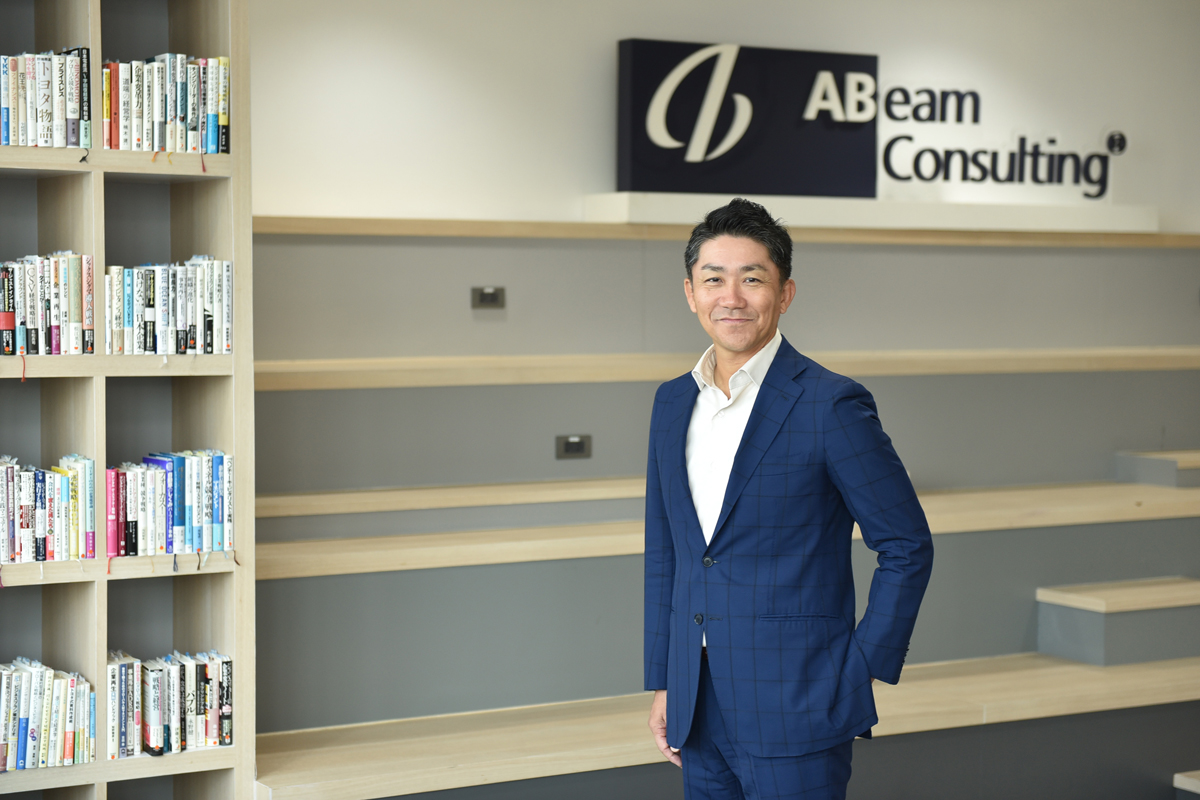
The name of our company, ABeam, is derived from "Asian Beam"—a ray or force from Asia—which reflects our strong commitment to Asia. While our roots are in Japan, our aspiration is to contribute to Asian society by supporting both Japanese and Asian companies.
Today, across the Southeast Asia region under my oversight, approximately 1,400 people are active across five countries: Thailand, Singapore, Malaysia, Indonesia, and Vietnam. The largest office, in Thailand, has around 500 people and has grown into a leading position among full-service consulting firms in the country in terms of business scale, revenue, and number of consultants.
The Thailand office, where I have served as Managing Director, includes not only Thai nationals but also members of many different nationalities, including Belgians. Across Southeast Asia as a whole, the diversity is even more pronounced, with French, Indian, and Chinese professionals working alongside local members.
In building such diverse teams, I find DHBR to be an invaluable resource. We are currently working under the hypothesis that the diversity present in our Southeast Asian offices represents the model of global management we should aim for in the future. To realize this, it is essential to articulate a vision to diverse members, gain their empathy, and actively involve them. When Japanese way of thinking or communicating are not fully understood, DHBR —rich in perspectives from the United States and Europe— has proven particularly useful. By sharing and referencing these perspectives, I have found that we can gradually build shared understanding. In addition, DHBR offers a wealth of insights on diversity, including perspectives from Generation Z and women, making it an especially valuable source of viewpoints I do not naturally possess.
In Thailand, with the goal of "building teams capable of sustainable growth," we have pursued transformation by developing next-generation leaders and shifting the organization from being expatriate-centered to being led primarily by local members. Going forward, we will enter a phase of expanding the structural reforms implemented in Thailand to other Southeast Asian countries. What will be critical in doing so is maintaining a high-level perspective, while moving forward with a strong sense of ownership and personal conviction.
We aim to move beyond a model that have been centered on Japan, and I believe it is possible to create new services and concepts overseas and then bring them back to Japan, and scale them globally. While Japan’s tendency toward perfectionism can lead to hesitation, Southeast Asia offers an environment where people can act with agility and take on new challenges. I intend to continue driving further transformation with Southeast Asia going forward.