Once all conquering, Japanese manufacturing is now facing structural challenges.
These come in the form of labor shortages stemming from a declining and aging population, diversification of product lineups and manufacturing variety and volume, difficulties in passing on technical skills as skilled technicians retire, and operational limitations stemming from individualization of work. They also encompass external factors in the form of decarbonization and geopolitical risks, and supply chain disruptions, and pressures over threats to the competitive edges of companies.
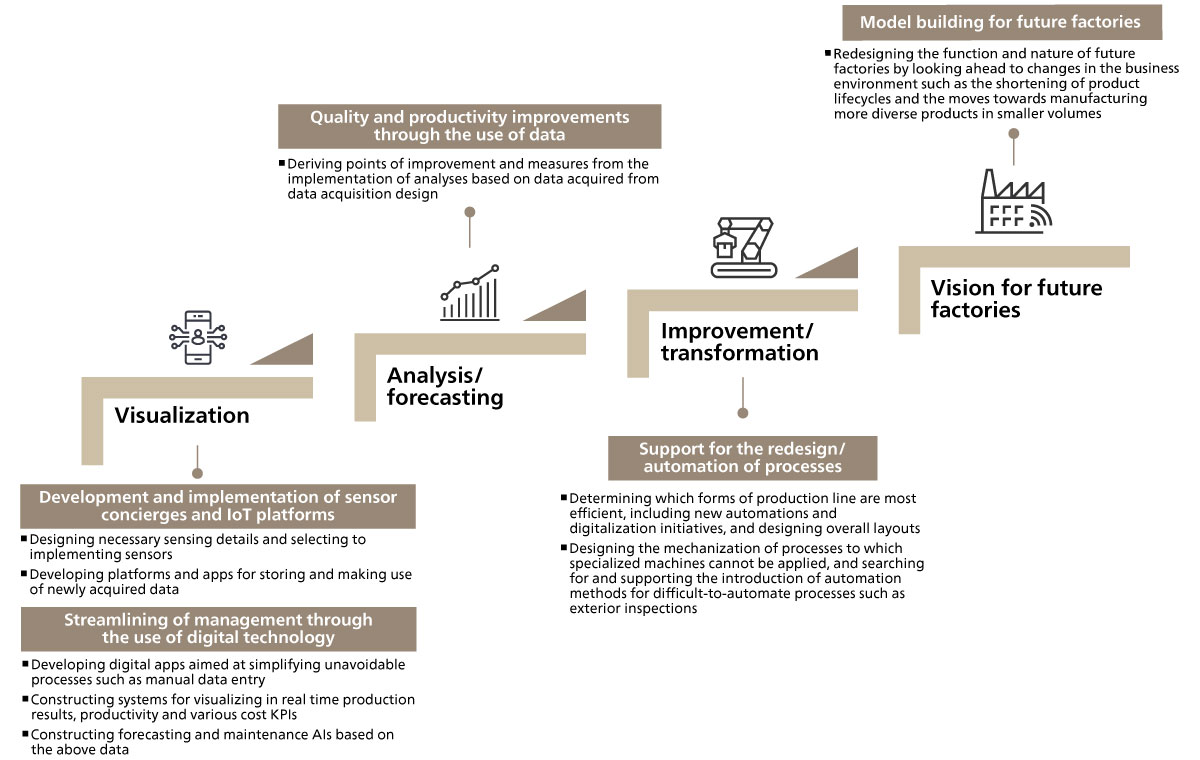
Given these circumstances, it seems unlikely that companies will be able to meet these challenges adequately through the one-off application of digital technologies to existing manufacturing processes in the form of visualizing processes using IoT or performing data analysis. Instead, companies face the need to build optimal solutions in the form of smart factories that can support sustainable growth over the long term and be the starting point for transformation, by combining multiple factors needed for business improvement, such as reconstruction and automation of processes.
Now is the time to combine technologies with the capabilities and strengths on the ground and lead Japanese manufacturing to the next stage.