

The 8th Global Islamic Finance Forum (GIFF), proudly hosted by Association of Islamic Banking and Islamic Finance (AIBIM), returned as the premier event that brought together global leaders in Islamic finance. AIBIM is Malaysia’s leading industry body for Islamic financial institutions, established to promote sound Islamic banking practices and foster collaboration across the sector. It serves as a platform for member institutions—including Islamic banks, development financial institutions, and digital banks—to shape industry standards, drive innovation, and support inclusive financial growth aligned with Shariah principles.
Under the theme “Bridging Tradition and Tomorrow: Advancing Business, Empowering Communities”, GIFF 2025 explored how Islamic finance harmonized its ethical foundations with modern innovation. The event served as a dynamic platform for policymakers, industry experts, Shariah scholars, academicians, and thought leaders to shape the future of Islamic finance through impactful dialogue and collaboration which showcased how Islamic finance drove business growth while uplifting communities thus paving the way for sustainable development, inclusive progress, and resilient economies.
Global Islamic Finance Forum (GIFF) 2025 Event Report

1.Overview of Global Islamic Finance Forum (GIFF) 2025
 ABeam Consulting’s Booth & Event Speakers
ABeam Consulting Malaysia (ABMY) participated as one of the Emerald Partners of this event to show our capabilities and commitment to advancing innovative Islamic finance as well as the financial industry. ABMY provides strategic consulting, digital transformation expertise and much more.
2.Keynote Speech by YAB Prime Minister Dato’ Seri Anwar Bin Ibrahim
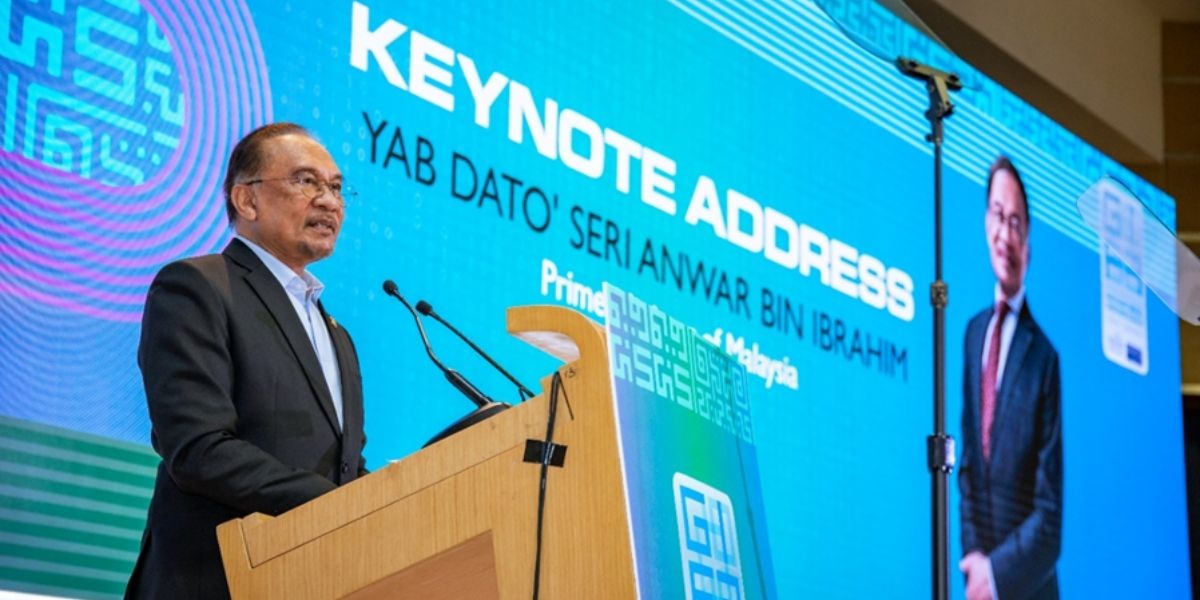 Prime Minister’s Speech
Prime Minister YAB Dato’ Seri Anwar Ibrahim delivered a compelling keynote address, reaffirming Malaysia’s leadership in Islamic finance and its role in shaping a more ethical and inclusive global financial landscape. He highlighted the importance of aligning financial instruments with the overarching objectives of Maqasid al-Shariah. These objectives form the fundamental purposes of Islamic law, representing a core framework within Islamic study of law that prioritizes the realization of underlying principles and aims over the mere literal application of legal provisions. In essence, Maqasid al-Shariah aims to preserve and promote essential human interests and well-being. The Prime Minister highlighted Malaysia’s success in issuing RM20 billion in Sustainable and Responsible Investment (SRI) Sukuk in 2024, showcasing the nation’s commitment to mobilizing capital for social and environmental impact.
He called for a shift from profit-only models to purpose-driven finance, emphasizing that without strong governance and ethical foundations, even the most sophisticated instruments risk losing their value. His address inspired stakeholders to harness Islamic finance as a tool for empowering communities, fostering innovation, and driving sustainable development thus ensuring that growth leaves no one behind.
3.Main Financial Themes from the Event
3.1. Digital Transformation & Innovations
Digital innovation was a central theme of the event, highlighting how technology is reshaping financial services to be more inclusive, transparent, and value driven. The discussions emphasized that digital tools are not just enhancing efficiency, they’re redefining how financial institutions serve communities and align with broader social goals.
Artificial intelligence (AI), one of the hottest topics globally, was also highlighted several times throughout the event for the transformative roles it can play in revolutionizing finance. AI can be utilized to streamline customer onboarding and personalize financial products. AI-powered platforms are now capable of tailoring savings and investment solutions based on individual preferences and align with local regulations. For instance, banks are experimenting with AI-enabled savings accounts that adjust returns based on ethical considerations and customer behavior. AI is revolutionizing traditional financial processes such as Know Your Customer (KYC) and risk profiling, enabling faster, more cost-effective operations – increasing efficiency and scale.
Blockchain technology was recognized as a key enabler of trust and traceability. Combining AI and Blockchain further enhances governance and traceability. Blockchain is being used to track the flow of investments and charitable funds and ensure that the funds reach their intended beneficiaries. This is especially useful in managing community-focused programs like microfinance and social protection schemes thereby enhancing trust in the system. Another innovation which complements Blockchain is smart contracts, which automate financial agreements and reduce the need for manual oversight. Smart contracts are auditable which further enhances financial transparency.
Fintech platforms are also expanding access to financial services including Islamic finance. Peer-to-peer lending apps, digital wallets, and tokenized assets are making it easier for small businesses and individuals to access funding. One shared use case was a tokenized gold-backed microfinance initiative, which allows low-income borrowers to access credit while maintaining asset security. Another use case shared was Halogen, the world’s first shariah-compliant digital asset fund.
Speakers also emphasized the need for ethical design in technology. AI systems must be explainable and built with safeguards to avoid biasness or misuse. Regulators and scholars called for frameworks that ensure digital tools remain aligned with values like fairness, transparency, and accountability.
3.2. Environmental, Social & Governance (ESG) Values
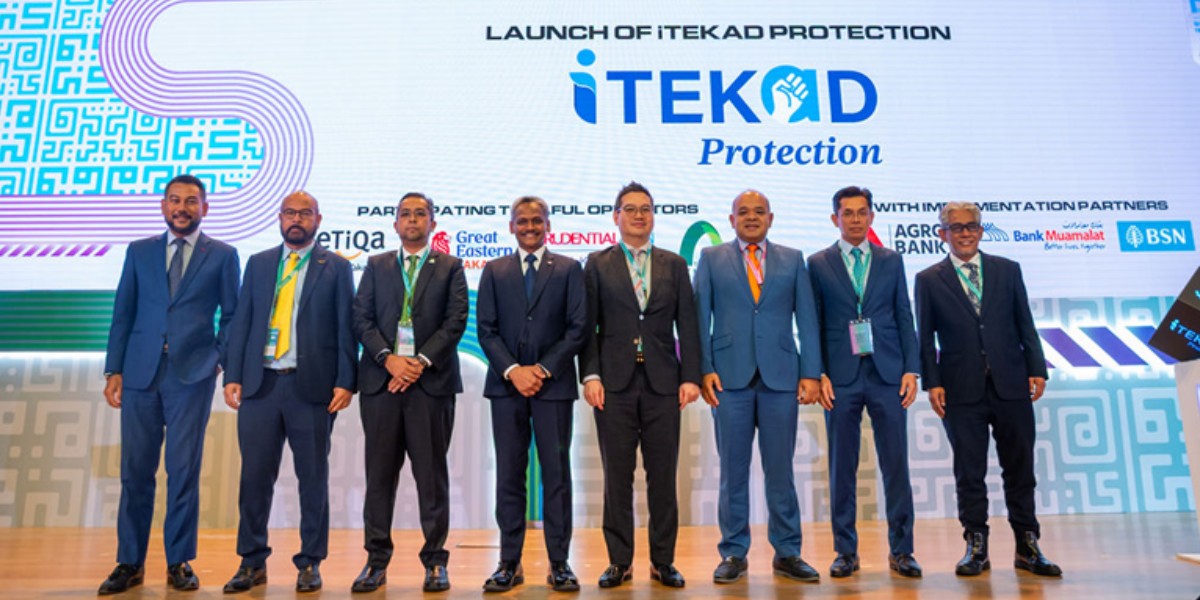 i-TEKAD Protection Program
The Takaful industry in Malaysia has united to expand the i-TEKAD Protection Program under Budget 2025, aiming to provide inclusive financial protection for underserved communities such as microentrepreneurs and gig workers. The initiative leverages a blended finance model, combining self-contributions, philanthropic funds (zakat and waqf), and government grants to offer Takaful coverage. It also includes support services like financial literacy, mental health resources, and business continuity training. This program is supported by major Takaful operators including Prudential BSN Takaful, Etiqa, Takaful IKHLAS, and Great Eastern Takaful. This expansion reflects a broader commitment to value-based finance and aligns with Malaysia’s Hijrah27 Transformation Plan, reinforcing the role of Islamic finance in promoting social resilience and economic empowerment.
Ethical Islamic finance principles can encourage businesses to enter the Islamic finance market by offering a values-driven alternative that emphasizes trust, fairness, and inclusivity. Bank Negara Malaysia Governor, Dato’ Sri Abdul Rasheed Ghaffour highlighted that Islamic finance is not just about compliance, but about purposeful transformation, reimagining financial systems to serve broader societal goals. By promoting equity-based instruments like Mudarabah and Musharakah and integrating tools such as waqf and zakat for impact-driven outcomes, Islamic finance creates a compelling environment for businesses seeking ethical, sustainable, and socially responsible growth. These principles also align with global ESG trends, making Islamic finance attractive to companies aiming to meet both financial and moral objectives.
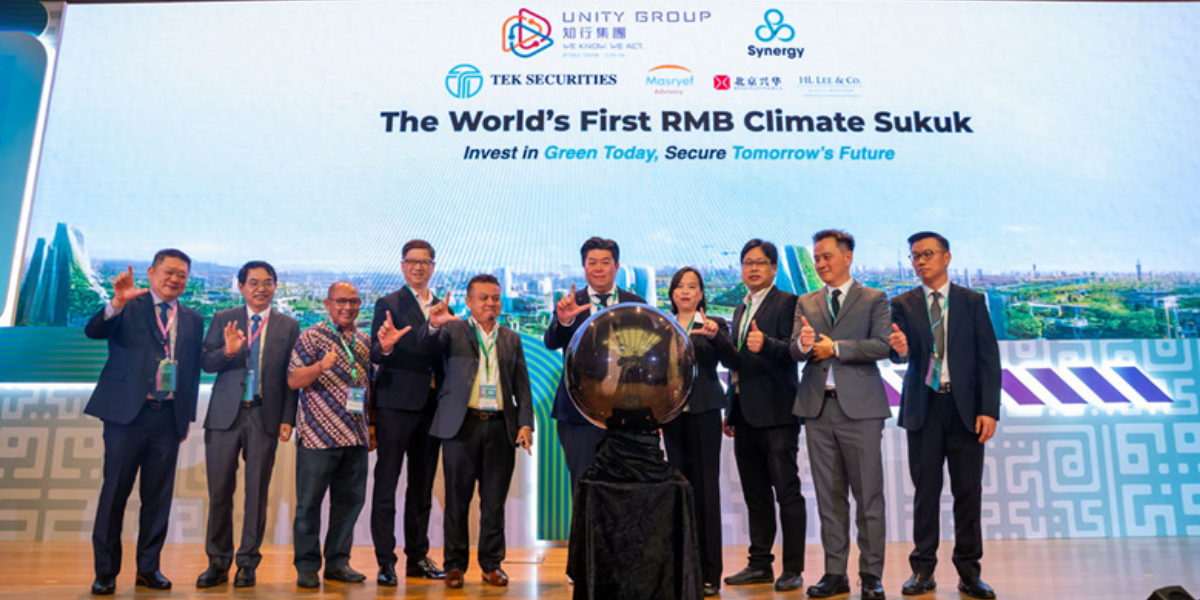 Launching of World’s First Climate Sukuk
Malaysia has taken a pioneering step in green Islamic finance by launching the world’s first RM118.3 million Climate Sukuk, a landmark issuance that integrates Shariah principles with green finance, digital tokenization, and carbon credit monetization. This sukuk is backed by over 40,000 tons of verified carbon credits from Selangor’s energy efficiency initiatives and aims to fund sustainable upgrades in residential buildings. Structured under the Labuan IBFC framework, it positions Malaysia as a global leader in innovative ESG-linked Islamic financial instruments, aligning with the country’s broader push for climate action and digital finance integration.
Islamic finance is increasingly aligning with ESG goals through Value-Based Intermediation (VBI). VBI-linked financing in Malaysia reached RM217 billion, with RM80 billion directed toward climate and social objectives. Experts from HSBC Amanah, Bank Indonesia, and WWF-Malaysia emphasized the role of Islamic finance in promoting ethical governance, climate resilience, and inclusive development. They also highlighted the importance of integrating Maqasid al-Shariah with ESG frameworks to drive meaningful sustainability outcomes across the financial sector.
Bank Negara Malaysia Governor, Dato’ Sri Abdul Rasheed Ghaffour emphasized the need for Islamic finance to undergo a transformative shift toward inclusivity and sustainability. He called for broader use of risk-sharing structures like Mudarabah and Musharakah, positioning Islamic finance as a key driver of the halal economy and sustainable development. The Governor also highlighted the strategic potential of waqf and zakat as impact-driven tools, advocating for improved governance and outcome measurement. [NM1] Malaysia’s commitment to value-based finance was showcased through initiatives such as VBI, social finance integration, and green sukuk frameworks. He urged global collaboration to scale Islamic finance’s impact and praised HRH Sultan Nazrin Shah’s leadership in aligning the industry with the UN Sustainable Development Goals (SDG).
3.3. Strategic Collaboration & Market Integration
GIFF 2025 also focused on the importance of collaboration and regional integration in scaling financial impact. The forum also discusses how harmonized standards and cross-border partnerships can build global trust which unlocks new opportunities. One of which is intra-OIC investment, where member countries of the Organization of Islamic Cooperation (OIC) are increasingly collaborating on financial and economic initiatives. This includes joint ventures, shared infrastructure financing, and knowledge exchange. Such efforts are helping to reduce fragmentation and create more cohesive financial ecosystems across regions.
One of the key challenges addressed was the lack of consistency in financial regulations across countries, which can hinder international investments. To tackle this, several countries including Malaysia, UAE, and Turkey are working together through centralized advisory meetings to align their financial governance frameworks. These efforts aim to reduce duplication, improve trust, and make it easier for businesses to operate across borders.
A practical example of regional integration was the ASEAN+ Takaful transformation initiative, which aims to standardize insurance practices across Southeast Asia. Countries like Indonesia, Brunei, and the Philippines shared their progress in expanding inclusive insurance coverage, especially for underserved communities. Malaysia as a regional pioneer since 1984, continues to lead through proactive regulation and has launched the Hijrah 2027 Framework, which aims to mainstream Takaful and drive sustainable, high-quality growth.
Youth empowerment and talent development was another discussion. Programs like the Global Executive Programme are being developed to nurture future leaders in finance and technology. These initiatives provide mentorship, funding, and training to young entrepreneurs, helping them turn ideas into scalable solutions.
The forum also emphasized the need for contract standardization to simplify cross-border transactions. Institutions are working on universal templates for financial agreements such as investment contracts and bonds that can be adapted to local legal systems while maintaining consistency. This approach reduces confusion and accelerates deal-making across regions.
Finally, the role of multi-stakeholder collaboration was highlighted in the forums. Banks, fintechs, regulators, and community organizations are increasingly working together to support sectors like agriculture, healthcare, and education. For example, blended finance models combining commercial capital with philanthropic funds are being used to support ethical farming and food security projects in Malaysia and beyond.
In essence, GIFF 2025 highlighted that strategic collaboration is not just a policy goal it’s a practical necessity for building resilient, inclusive, and globally connected financial systems.
4.How ABeam Consulting Malaysia Supports these Themes
ABeam Malaysia supports the strategic priorities of GIFF 2025 through integrated consulting capabilities, regional delivery strength, and proven methodologies. Our approach addresses key themes such as sustainability, financial inclusion, ethical finance, digital transformation, and strategic collaboration, ensuring alignment with Maqasid Shariah and ESG principles.
To accelerate market entry and product development, ABeam provides a structured Market Research Framework that helps Islamic finance players identify growth opportunities and design inclusive products for underserved segments such as B40 communities, MSMEs, and gig workers. This framework combines macroeconomic analysis, customer segmentation, competitor benchmarking, and expert interviews through platforms like VisasQ and AlphaSights. These insights enable the development of micro-Takaful and embedded finance solutions, feasibility studies for tokenized assets, and ESG-linked instruments. Deliverables include market landscape reports, competitive benchmarking, customer insights decks, and product strategy roadmaps, which are critical for new entrants and fintech aiming to launch Shariah-compliant offerings.
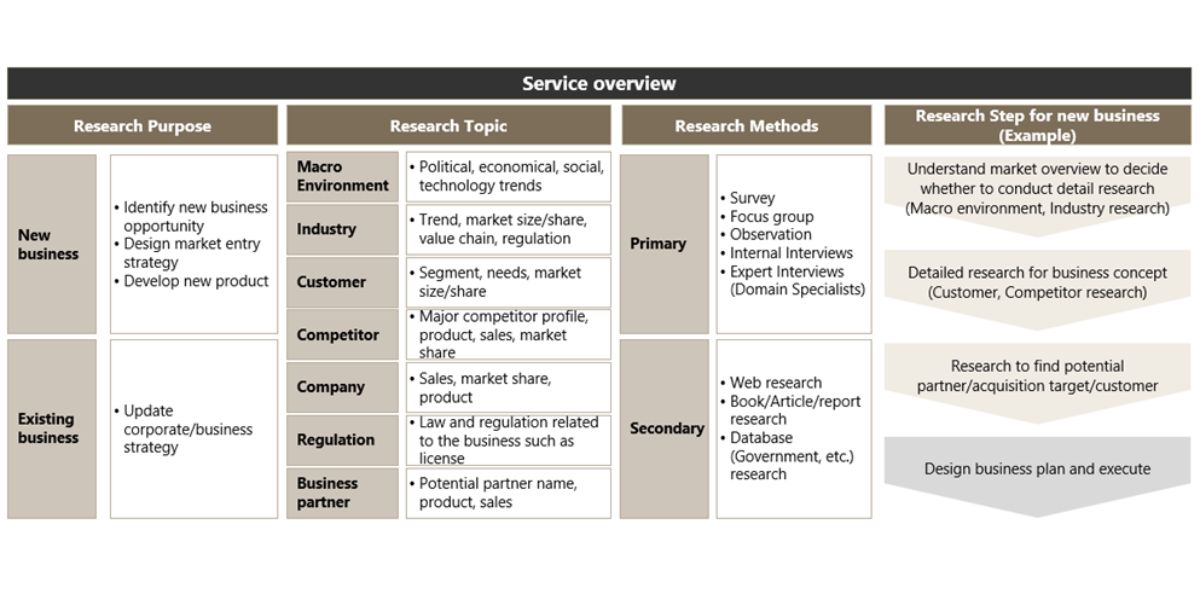 High-level Market Research Methodology
ABeam leverages its Business Process Reengineering (BPR) and Digital Transformation (DX) expertise to streamline Islamic financial operations, driving greater efficiency and elevating the customer experience. We help institutions implement straight-through processing for Islamic banking and Takaful, modernize core systems with cloud adoption and ESG-linked architecture, and deploy digital onboarding solutions such as e-KYC and e-wallet integration. AI-powered customer service, predictive analytics for agency performance, and digital POS tools further strengthen operational agility. Our DX roadmap includes As-Is/To-Be assessments, core modernization strategies, digital channel enhancements, and ESG-driven product innovation. These initiatives integrate ethical automation and Shariah governance compliance into financial workflows, ensuring transparency and accountability.
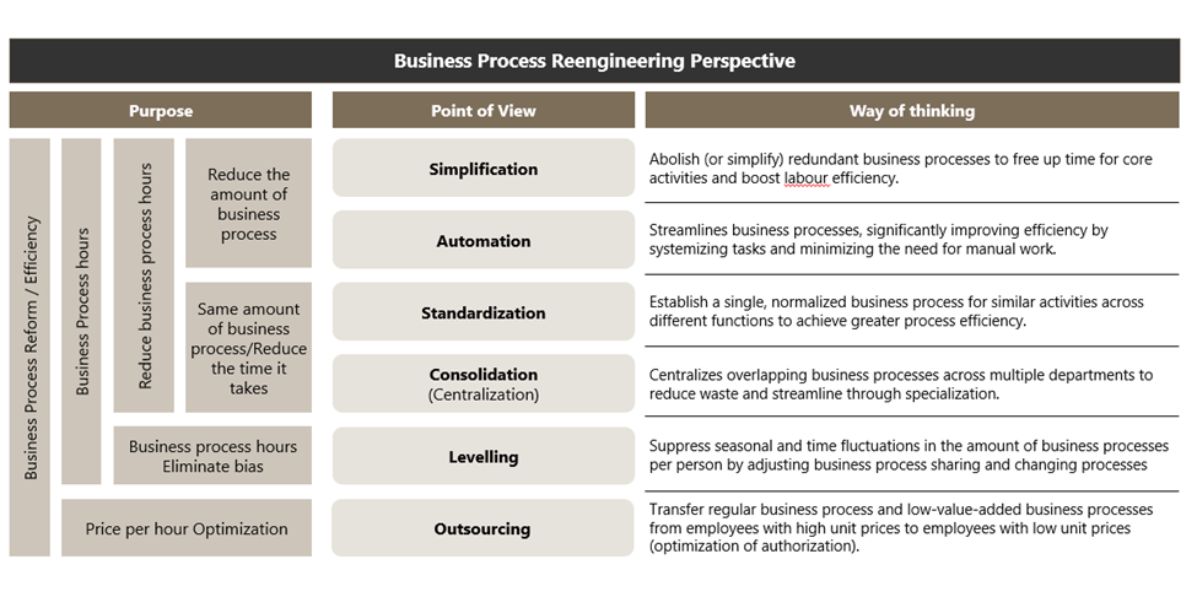 High-level BPR Methodology
Corporate strategy and strategic planning are central to ABeam’s support for Islamic finance institutions. We assist clients in refining their vision and mission, developing strategic roadmaps, and redesigning operating models to incorporate waqf-based finance and risk-sharing structures. Stakeholder alignment and change management are integral to these efforts. ABeam’s experience with clients such as SMBC and regional insurers demonstrates our ability to translate Maqasid Shariah objectives into commercially viable strategies that balance ethical finance principles with growth aspirations.
Digital innovation is a core strength of ABeam, enabling financial institutions to responsibly adopt emerging technologies while embedding fairness, transparency, and accountability. Our capabilities include designing 3–5-year DX roadmaps and modernizing legacy systems. These are demonstrated through ABeam’s work on CRM system design, implementation, and integration for an insurance company, as well as ISO 20022 migration support and UAT coordination for a banking institution.
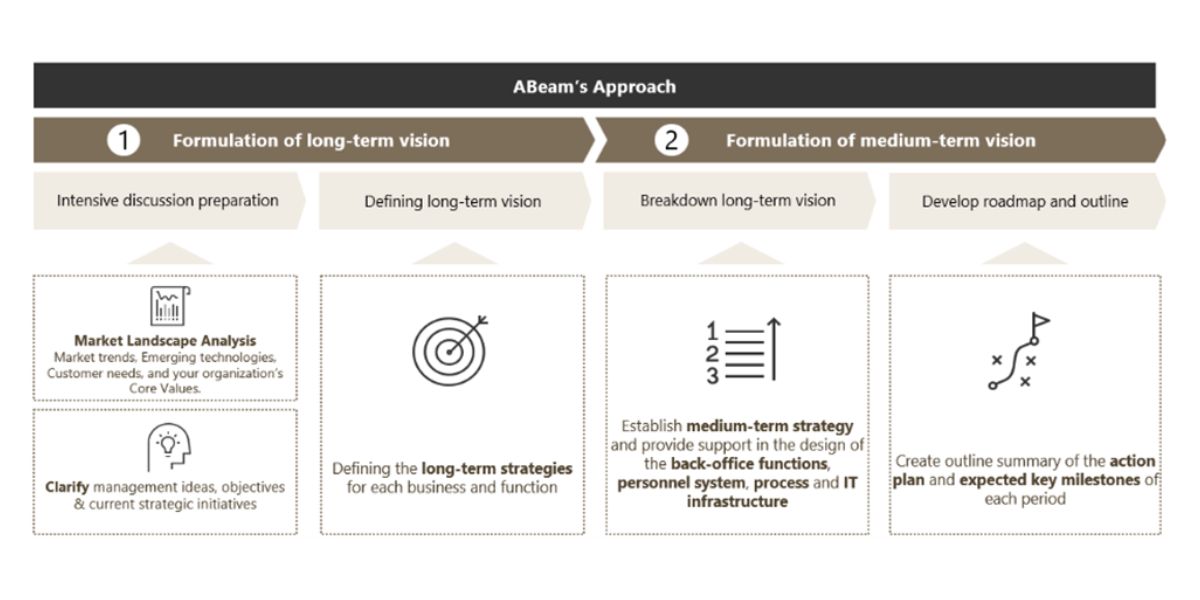 High-level BPR Methodology
ABeam provides end-to-end project management and implementation support to ensure successful execution of transformation initiatives. Our PMO services cover governance, resource planning, risk tracking, and communication strategies for our clients. This structured approach ensures that projects such as ESG sukuk issuance, digital customer experience rollouts, and harmonization of Shariah standards across regions are delivered with precision and measurable impact.
ABeam Consulting as a global management consulting firm offers various other services including SAP ERP, CRM implementations, Operational Infrastructure Platforms, outsourcing and more. ABeam Consulting leverages on its global & regional expertise through its 29 global offices and 135 alliance offices. Through these capabilities, ABeam Consulting empowers Islamic financial institutions to bridge tradition and innovation, delivering sustainable growth and ethical transformation in alignment with GIFF 2025.
Click here for inquiries and consultations